AI Code Lovable

AI Code Lovable — independent reviews, comparisons, pricing and step-by-step guides on Aizhi.

  • Rapid application development

    Rapid application development

    Rapid application development (RAD), also called rapid application building (RAB), is both a general term for adaptive software development approaches, and the name for James Martin's method of rapid development. In general, RAD approaches to software development put less emphasis on planning and more emphasis on an adaptive process. Prototypes are often used in addition to or sometimes even instead of design specifications. RAD is especially well suited for (although not limited to) developing software that is driven by user interface requirements. Graphical user interface builders are often called rapid application development tools. Other approaches to rapid development include the adaptive, agile, spiral, and unified models. == History == Rapid application development was a response to plan-driven waterfall processes, developed in the 1970s and 1980s, such as the Structured Systems Analysis and Design Method (SSADM). One of the problems with these methods is that they were based on a traditional engineering model used to design and build things like bridges and buildings. Software is an inherently different kind of artifact. Software can change the process used to solve a problem. As a result, knowledge gained from the development process itself can feed back to the requirements and design of the solution. Plan-driven approaches attempt to define requirements, the solution, and the implementation plan, and have a process that discourages changes. RAD approaches, on the other hand, recognize that software development is a knowledge intensive process and provide flexible processes that help take advantage of knowledge gained during the project to improve or adapt the solution. The first such RAD alternative was developed by Barry Boehm and was known as the spiral model. Boehm and other subsequent RAD approaches emphasized developing prototypes as well as or instead of rigorous design specifications. Prototypes had several advantages over traditional specifications: Risk reduction. A prototype could test some of the most difficult potential parts of the system early on in the life-cycle. This can provide valuable information as to the feasibility of a design and can prevent the team from pursuing solutions that turn out to be too complex or time-consuming to implement. This benefit of finding problems earlier in the life-cycle rather than later was a key benefit of the RAD approach. The earlier a problem can be found the cheaper it is to address. Users are better at using and reacting than at creating specifications. In the waterfall model it was common for a user to sign off on a set of requirements but then when presented with an implemented system to suddenly realize that a given design lacked some critical features or was too complex. In general most users give much more useful feedback when they can experience a prototype of the running system rather than abstractly define what that system should be. Prototypes can be usable and can evolve into the completed product. One approach used in some RAD methods was to build the system as a series of prototypes that evolve from minimal functionality to moderately useful to the final completed system. The advantage of this besides the two advantages above was that the users could get useful business functionality much earlier in the process. Starting with the ideas of Barry Boehm and others, James Martin developed the rapid application development approach during the 1980s at IBM and finally formalized it by publishing a book in 1991, Rapid Application Development. This has resulted in some confusion over the term RAD even among IT professionals. It is important to distinguish between RAD as a general alternative to the waterfall model and RAD as the specific method created by Martin. The Martin method was tailored toward knowledge intensive and UI intensive business systems. These ideas were further developed and improved upon by RAD pioneers like James Kerr and Richard Hunter, who together wrote the seminal book on the subject, Inside RAD, which followed the journey of a RAD project manager as he drove and refined the RAD Methodology in real-time on an actual RAD project. These practitioners, and those like them, helped RAD gain popularity as an alternative to traditional systems project life cycle approaches. The RAD approach also matured during the period of peak interest in business re-engineering. The idea of business process re-engineering was to radically rethink core business processes such as sales and customer support with the new capabilities of Information Technology in mind. RAD was often an essential part of larger business re engineering programs. The rapid prototyping approach of RAD was a key tool to help users and analysts "think out of the box" about innovative ways that technology might radically reinvent a core business process. Much of James Martin's comfort with RAD stemmed from Dupont's Information Engineering division and its leader Scott Schultz and their respective relationships with John Underwood who headed up a bespoke RAD development company that pioneered many successful RAD projects in Australia and Hong Kong. Successful projects that included ANZ Bank, Lendlease, BHP, Coca-Cola Amatil, Alcan, Hong Kong Jockey Club and numerous others. Success that led to both Scott Shultz and James Martin both spending time in Australia with John Underwood to understand the methods and details of why Australia was disproportionately successful in implementing significant mission critical RAD projects. == James Martin approach == The James Martin approach to RAD divides the process into four distinct phases: Requirements planning phase – combines elements of the system planning and systems analysis phases of the systems development life cycle (SDLC). Users, managers, and IT staff members discuss and agree on business needs, project scope, constraints, and system requirements. It ends when the team agrees on the key issues and obtains management authorization to continue. User design phase – during this phase, users interact with systems analysts and develop models and prototypes that represent all system processes, inputs, and outputs. The RAD groups or subgroups typically use a combination of joint application design (JAD) techniques and CASE tools to translate user needs into working models. User design is a continuous interactive process that allows users to understand, modify, and eventually approve a working model of the system that meets their needs. Construction phase – focuses on program and application development task similar to the SDLC. In RAD, however, users continue to participate and can still suggest changes or improvements as actual screens or reports are developed. Its tasks are programming and application development, coding, unit-integration and system testing. Cutover phase – resembles the final tasks in the SDLC implementation phase, including data conversion, testing, changeover to the new system, and user training. Compared with traditional methods, the entire process is compressed. As a result, the new system is built, delivered, and placed in operation much sooner. == Advantages == In modern Information Technology environments, many systems are now built using some degree of Rapid Application Development (not necessarily the James Martin approach). In addition to Martin's method, agile methods and the Rational Unified Process are often used for RAD development. The purported advantages of RAD include: Better quality. By having users interact with evolving prototypes the business functionality from a RAD project can often be much higher than that achieved via a waterfall model. The software can be more usable and has a better chance to focus on business problems that are critical to end users rather than technical problems of interest to developers. However, this excludes other categories of what are usually known as Non-functional requirements (AKA constraints or quality attributes) including security and portability. Risk control. Although much of the literature on RAD focuses on speed and user involvement a critical feature of RAD done correctly is risk mitigation. It's worth remembering that Boehm initially characterized the spiral model as a risk based approach. A RAD approach can focus in early on the key risk factors and adjust to them based on empirical evidence collected in the early part of the process. E.g., the complexity of prototyping some of the most complex parts of the system. More projects completed on time and within budget. By focusing on the development of incremental units the chances for catastrophic failures that have dogged large waterfall projects is reduced. In the Waterfall model it was common to come to a realization after six months or more of analysis and development that required a radical rethinking of the entire system. With RAD this kind of information can be discovered and acted upon earlier in the proces

    Read more →
  • Unknown key-share attack

    Unknown key-share attack

    As defined by Blake-Wilson & Menezes (1999), an unknown key-share (UKS) attack on an authenticated key agreement (AK) or authenticated key agreement with key confirmation (AKC) protocol is an attack whereby an entity A {\displaystyle A} ends up believing she shares a key with B {\displaystyle B} , and although this is in fact the case, B {\displaystyle B} mistakenly believes the key is instead shared with an entity E ≠ A {\displaystyle E\neq A} . In other words, in a UKS, an opponent, say Eve, coerces honest parties Alice and Bob into establishing a secret key where at least one of Alice and Bob does not know that the secret key is shared with the other. For example, Eve may coerce Bob into believing he shares the key with Eve, while he actually shares the key with Alice. The “key share” with Alice is thus unknown to Bob.

    Read more →
  • Tableau de Concordance

    Tableau de Concordance

    The Tableau de Concordance was the main French diplomatic code used during World War I; the term also refers to any message sent using the code. It was a superenciphered four-digit code that was changed three times between 1 August 1914 and 15 January 1915. The Tableau de Concordance is considered superenciphered because there is more than one step required to use it. First, each word in a message is replaced by four digits via a codebook. These four digits are divided into three groups (one digit, two digits, one digit) so that when the whole message has been translated into code, the four-digit sets can be put together so it looks like the entire message is made up of two-digit pairs. This is called a "Straddle Gimmick." Then, in turn, each of these two digit pairs (and the single digits at the beginning and end) are replaced by two letters. The letters are then combined with no spaces for the final ciphertext. The manual for the Tableau de Concordance included the instruction that if there was not adequate time for completely enciphering the message, it should simply be sent in clear, because a partially enciphered message would have provided insight into the inner workings of the code.

    Read more →
  • Trust federation

    Trust federation

    A trust federation is part of the evolving Identity Metasystem that will bring a new layer of persistent identity and trusted data sharing to the Internet. Although the concept of trust federations is technology neutral, several protocols like SAML, OpenID, Information Card, XDI can handle the challenges of technical interoperability. The challenge of business and social interoperability requires a new type of cooperative association similar to a credit card association. Instead of banks, however, a trust federation is an alliance of i-brokers and their customers who agree to abide by a common set of agreements in the care and handling of customer data. A model for trust federations is offered by Open Identity Exchange and Kantara Initiative, which is applied in the U.S. Government ICAM Trust Framework. Some operational trust federations are: InCommon (academic, USA) REFEDs (Research and Education Federations, Europe) IGTF Interoperable Global Trust Federation Portalverbund Government Portal Federation, Austria Trust federations are not limited to the social web use case, but apply to all federations where trust in identity and compliance to other objectives of information security such as confidentiality, integrity and privacy is brokered.

    Read more →
  • WeChat

    WeChat

    WeChat or Weixin in Chinese (Chinese: 微信; pinyin: Wēixìn ; lit. 'micro-message') is an instant messaging, social media, and mobile payment app developed by Tencent. First released in 2011, it became the world's largest standalone mobile app in 2018 with over 1 billion monthly active users. The Chinese version of WeChat, Weixin, has been described as China's "app for everything" and a super-app because of its wide range of functions. WeChat provides text messaging, hold-to-talk voice messaging, broadcast (one-to-many) messaging, video conferencing, video games, mobile payment, sharing of photographs and videos and location sharing. It has been described as having "an almost indispensable part of life in China". Accounts registered using Chinese phone numbers are managed under the Weixin brand, and their data is stored in mainland China and subject to Weixin's terms of service and privacy policy. Non-Chinese numbers are registered under WeChat, and WeChat users are subject to a more liberal terms of service and better privacy policy, and their data is stored in the Netherlands for users in the European Union, and in Singapore for other users. User activity on Weixin, the Chinese version of the app, is analyzed, tracked and shared with Chinese authorities upon request as part of the mass surveillance network in China. Chinese-registered Weixin accounts censor politically sensitive topics, and the software license agreement for Weixin (but not WeChat) explicitly forbids content which "[en]danger[s] national security, divulge[s] state secrets, subvert[s] state power and undermine[s] national unity", as well as other types of content such as content that "[u]ndermine[s] national religious policies" and content that is "[i]nciting illegal assembly, association, procession, demonstrations and gatherings disrupting the social order". Due to its central part of Chinese life, a Chinese person having their WeChat account banned can cause a significant disruption to their life. Any interactions between Weixin and WeChat users are subject to the terms of service and privacy policies of both services. == History == By 2010, Tencent had already attained a massive user base with their desktop messenger app QQ. Recognizing smart phones were likely to disrupt this status quo, CEO Pony Ma sought to proactively invest in alternatives to their own QQ messenger app. WeChat began as a project at Tencent Guangzhou Research and Project center in October 2010. The original version of the app was created by Allen Zhang, named "Weixin" (微信) by Pony Ma, and launched in 2011. The user adoption of WeChat was initially very slow, with users wondering why key features were missing; however, after the release of the Walkie-talkie-like voice messaging feature in May of that year, growth surged. By 2012, when the number of users reached 100 million, Weixin was re-branded "WeChat" by President Martin Lau for the international market. During a period of government support of e-commerce development—for example in the 12th five-year plan (2011–2015)—WeChat also saw new features enabling payments and commerce in 2013, which saw massive adoption after their virtual Red envelope promotion for Chinese New Year 2014. WeChat had over 889 million monthly active users by 2016, and as of 2019 WeChat's monthly active users had risen to an estimate of one billion. As of January 2022, it was reported that WeChat has more than 1.2 billion users. After the launch of WeChat payment in 2013, its users reached 400 million the next year, 90 percent of whom were in China. By comparison, Facebook Messenger and WhatsApp had about one billion monthly active users in 2016 but did not offer most of the other services available on WeChat. For example, in Q2 2017, WeChat's revenues from social media advertising were about US$0.9 billion (RMB6 billion) compared with Facebook's total revenues of US$9.3 billion, 98% of which were from social media advertising. WeChat's revenues from its value-added services were US$5.5 billion. By 2018, WeChat had been used by 93.5% of Chinese internet users. In that year, it became the world's largest standalone mobile app in 2018 with over 1 billion monthly active users. In response to a border dispute between India and China, WeChat was banned in India in June 2020 along with several other Chinese apps, including TikTok. U.S. president Donald Trump sought to ban U.S. "transactions" with WeChat through an executive order but was blocked by a preliminary injunction issued in the United States District Court for the Northern District of California in September 2020. Joe Biden officially dropped Trump's efforts to ban WeChat in the U.S. in June 2021. == Features == WeChat, has been described as China's "app for everything" and a super-app because of its wide range of functions. WeChat provides text messaging, hold-to-talk voice messaging, broadcast (one-to-many) messaging, video conferencing, video games, mobile payment, sharing of photographs and videos and location sharing. It has been described as having "an almost indispensable part of life in China". Due to its central part of Chinese life, a Chinese person having their WeChat account banned can cause a significant disruption to their life. === Messaging === WeChat provides a variety of features including text messaging, hold-to-talk voice messaging, broadcast (one-to-many) messaging, video calls and conferencing, video games, photograph and video sharing, as well as location sharing. WeChat also allows users to exchange contacts with people nearby via Bluetooth, as well as providing various features for contacting people at random if desired (if people are open to it). It can also integrate with other social networking services such as Facebook and Tencent QQ. Photographs may also be embellished with filters and captions, and automatic translation service is available and could also translate the conversation during messaging. WeChat supports different instant messaging methods, including text messages, voice messages, walkie talkie, and stickers. Users can send previously saved or live pictures and videos, profiles of other users, coupons, lucky money packages, or current GPS locations with friends either individually or in a group chat. WeChat also provides a message recall feature to allow users to recall and withdraw information (e.g. images, documents) that are sent within 2 minutes in a conversation. WeChat also provides a voice-to-text feature that brings convenience when it is not convenient to listen to voice messages, as well as the basic ability to recognize emojis based on different tones of voice. A distance sensing feature is implemented in WeChat. It has the ability to activate the receivers' hold-to-talk function when the phone was brought in close proximity to the ear. After the receiver was held at a certain distance from the ear, the sensor would then proceed to automatically disable the phone speakers. This feature eliminates the risk of the user's voice messages being inadvertently broadcast to the general public. === Public accounts === WeChat users can register as a public account (公众号), which enables them to push feeds to subscribers, interact with subscribers, and provide subscribers with services. Users can also create an official account, which fall under service, subscription, or enterprise accounts. Once users as individuals or organizations set up a type of account, they cannot change it to another type. By the end of 2014, the number of WeChat official accounts had reached 8 million. Official accounts of organizations can apply to be verified (cost 300 RMB or about US$45). Official accounts can be used as a platform for services such as hospital pre-registrations, or credit card service. To create an official account, the applicant must register with Chinese authorities, which discourages "foreign companies". In April 2022, WeChat announced that it will start displaying the location of users in China every time they post on a public account. Meanwhile, overseas users on public accounts will also display the country based on their IP address. === Moments === "Moments" (朋友圈) is WeChat's brand name for its social feed of friends' updates. "Moments" is an interactive platform that allows users to post images, text, and short videos taken by users. It also allows users to share articles and music (associated with QQ Music or other web-based music services). Friends in the contact list can like the content and leave comments, functioning similarly to a private social network. In 2017 WeChat had a policy of a maximum of two advertisements per day per Moments user. Privacy in WeChat works by groups of friends: only the friends from the user's contact are able to view their Moments' contents and comments. The friends of the user will only be able to see the likes and comments from other users only if they are in a mutual friend group. For example, friends from high school are not able to

    Read more →
  • Yao's test

    Yao's test

    In cryptography and the theory of computation, Yao's test is a test defined by Andrew Chi-Chih Yao in 1982, against pseudo-random sequences. A sequence of words passes Yao's test if an attacker with reasonable computational power cannot distinguish it from a sequence generated uniformly at random. == Formal statement == === Boolean circuits === Let P {\displaystyle P} be a polynomial, and S = { S k } k {\displaystyle S=\{S_{k}\}_{k}} be a collection of sets S k {\displaystyle S_{k}} of P ( k ) {\displaystyle P(k)} -bit long sequences, and for each k {\displaystyle k} , let μ k {\displaystyle \mu _{k}} be a probability distribution on S k {\displaystyle S_{k}} , and P C {\displaystyle P_{C}} be a polynomial. A predicting collection C = { C k } {\displaystyle C=\{C_{k}\}} is a collection of boolean circuits of size less than P C ( k ) {\displaystyle P_{C}(k)} . Let p k , S C {\displaystyle p_{k,S}^{C}} be the probability that on input s {\displaystyle s} , a string randomly selected in S k {\displaystyle S_{k}} with probability μ ( s ) {\displaystyle \mu (s)} , C k ( s ) = 1 {\displaystyle C_{k}(s)=1} , i.e. Moreover, let p k , U C {\displaystyle p_{k,U}^{C}} be the probability that C k ( s ) = 1 {\displaystyle C_{k}(s)=1} on input s {\displaystyle s} a P ( k ) {\displaystyle P(k)} -bit long sequence selected uniformly at random in { 0 , 1 } P ( k ) {\displaystyle \{0,1\}^{P(k)}} . We say that S {\displaystyle S} passes Yao's test if for all predicting collection C {\displaystyle C} , for all but finitely many k {\displaystyle k} , for all polynomial Q {\displaystyle Q} : === Probabilistic formulation === As in the case of the next-bit test, the predicting collection used in the above definition can be replaced by a probabilistic Turing machine, working in polynomial time. This also yields a strictly stronger definition of Yao's test (see Adleman's theorem). Indeed, one could decide undecidable properties of the pseudo-random sequence with the non-uniform circuits described above, whereas BPP machines can always be simulated by exponential-time deterministic Turing machines.

    Read more →
  • Weird SoundCloud

    Weird SoundCloud

    Weird SoundCloud, or SoundClown, is a mashup parody music scene taking place on the online distribution platform SoundCloud. The scene has been described by its producers and music journalists to be a satirical take on electronic dance music, and useless, throwaway internet content. One critic, Audra Schroeder, categorized it as an in-joke that is "deconstructing and reshaping memes and popular music, recontextualizing the sacred texts of millennial chat rooms." == Origins == In a January 2014 interview, DJ Kevin Wang suggested that the Weird SoundCloud has "been around in the last one to two years", but started to gain much more popularity the previous year through electronic dance music internet blogs. Weird SoundCloud producer Ideaot suggested that some in the phenomenon came from the YouTube poop scene. Another producer in the community, DJ @@ (AT-AT), reasoned that producers joining the scene "want to express their musicality, see it as a more mature form of YouTube Poop," or are "just looking for recognition on social media sites." AT-AT said that it was "a fun thing to do, and after I stopped making proper music I felt I needed a bit of an outlet for my creativity. The fact that people enjoyed it and/or treated it as a travesty (Direct quote from one of my tracks) spurs me on." == Characteristics == Weird SoundCloud is a mash-up and parody music genre labeled by journalist Audra Schroeder as an in-joke that is "deconstructing and reshaping memes and popular music, recontextualizing the sacred texts of millennial chat rooms." Most tracks range from around 30 seconds to one minute in length. The people who make weird SoundCloud are known as SoundClowns, a term coined by producer Dicksoak. Ideaot described the weird SoundCloud community as "largely just people who are friends with each other." Noisey critic Ryan Bassil spotlight the variety of music coming out of the weird SoundCloud landscape: "One minute you could be listening to the Seinfeld theme reimagined as an aneurysm inducing dubstep corker, the next, you're recovering from hearing a version of Tenacious D's "Tribute" that's akin to having a stroke." Bassil analyzes that the tracks "often take the past and repurpose it into something that, although not altogether useful, sounds fresh and reflective of the abstract, confusing panoramic that encapsulates the modern internet." Bassil compared the lexicon of SoundClown's track titles to that of Reddit and Twitter users. According to Dicksoak, most works of the style are critiques of EDM or "are just uploaded because they sound funny." However, Bassil disagreed, writing that there are also many tracks that keep repurposing a certain meme, such as "mom's spaghetti" or the re-use of vocals from recordings by hip hop group Death Grips. He describe the scene's re-use of memes as a satirical take on pointless online content that is only on the internet to "do nothing other than fill the void": They're changing the format of the original work's intended message or audience - a technique often employed by top-tier digital media companies - and in doing so they're sarcastically, ironically, taking the piss out of what Web 2.0's turned into - an open arena where the most ridiculous, unashamed, often pointless piggy-back content can rack up thousands and thousands of clicks. == Notable examples == There are mash-ups that "disrupt the flow of popular music", in the words of writer Schroeder, such as a "flutedrop" remix of the Miley Cyrus song "Wrecking Ball" and Shaliek's mashup of music by Bruno Mars and Korn. In November 2013, Wang released a set of mp3 files on SoundCloud named Best Drops Ever, which included tracks like "A Drop So Epic a Bunch of NYU Bros Already Bought a 3-Day Weekend Pass for It" and "A Drop So Crazy You'll Kill Your Family". All of the tracks start as normal electronic dance music build-ups, before they drop into a "bait and switch" audio or film clip such as Filet-O-Fish commercials, the Whitney Houston song "I Will Always Love You" and the film Bambi (1942) that ruins the anticipation. The collection is a parody of the over-importance and over-focus of the drop and lack of care of the overall quality of a song common in the modern electronic dance music scene. Wang has released more than 45 tracks in the weird SoundCloud, some of them receiving around a million plays. Subgenres of Weird SoundCloud include Macklecore, mash-ups and remixes that include the works of American hip-hop recording artist Macklemore, and Biggiewave, which include samples of songs from the album Ready to Die (1994) by The Notorious B.I.G. Common audio and meme sources used include Skrillex, the Martin Garrix track "Animals", Thomas the Tank Engine, Shrek, Macklemore, "Gangnam Style", the Bruno Mars track "Uptown Funk", the Disturbed track "Down with the Sickness", Space Jam, the Childish Gambino track "Bonfire", the Death Grips track "Takyon" and air horn sound effects. == Reception == Bassil praised the SoundClown scene as "loveable and strangely honest", reasoning that it "just reminds me that we're all humans on the internet, all searching for #content that means something, something to connect with, but usually only dredging up bastardised versions of things we've already read, seen, or watched before." Bassil also described the weird SoundCloud as a more successful version of a similar scene known as weird YouTube; the reason for the success of SoundClowns is due to SoundCloud's discovery algorithm: "Small collectives and trends are able to form, and there's an abundance of tracks from artists who are almost forging careers out of it, as opposed to uploading one viral hit." Publications have made lists of weird SoundCloud works, such as BuzzFeed's "23 Of The Weirdest Songs On Soundcloud", Obsev's "Weird SoundCloud Mashups That Must've Been Made While Drunk", and Thump's "9 of the Best and Most Upsetting Soundclowns we Could Find", where writer Isabelle Hellyer called it the "most influential genre of music in human history." A Your EDM writer called it "oddly addicting."

    Read more →
  • Blacker (security)

    Blacker (security)

    Blacker (styled BLACKER) is a U.S. Department of Defense computer network security project designed to achieve A1 class ratings (very high assurance) of the Trusted Computer System Evaluation Criteria (TCSEC). The first Blacker program began in the late 1970s, with a follow-on eventually producing fielded devices in the late 1980s. It was the first secure system with trusted end-to-end encryption on the United States' Defense Data Network. The project was implemented by SDC (software), and Burroughs (hardware), and after their merger, by the resultant company Unisys.

    Read more →
  • Robot Monk Xian'er

    Robot Monk Xian'er

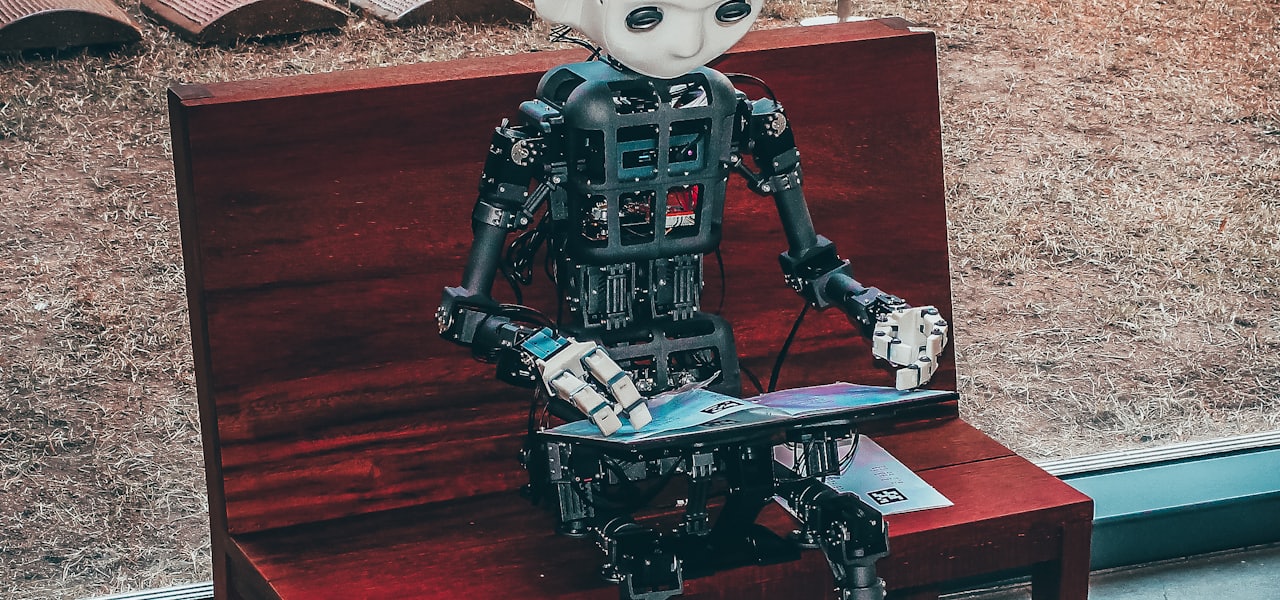
    Robot Monk Xian'er (Chinese: 贤二机器僧) is a humanoid robot based on the cartoon character Xian'er. It was developed by a team of monks, volunteers and AI experts from Beijing Longquan Monastery in Beijing, China. He can follow human instructions to make body movements, read scriptures and play Buddhist music. He can chat and respond to people's emotional and spiritual questions with Buddhist wisdom. As a chatbot, Robot Monk Xian'er is available on certain public platforms including WeChat and Facebook. Over the years, master Xuecheng, the abbot of Beijing Longquan Monastery, replied to thousands of questions on Sina Weibo. These questions and their answers become the data source of the chatbot.

    Read more →
  • G.hn

    G.hn

    Gigabit Home Networking (G.hn) is a specification for wired home networking that supports speeds up to 2 Gbit/s and operates over four types of legacy wires: telephone wiring, coaxial cables, power lines and plastic optical fiber. Some benefits of a multi-wire standard are lower equipment development costs and lower deployment costs for service providers (by allowing customer self-install). == History == G.hn was developed under the International Telecommunication Union's Telecommunication Standardization sector (the ITU-T) and promoted by the HomeGrid Forum and several other organizations. ITU-T Recommendation (the ITU's term for standard) G.9960, which received approval on October 9, 2009, specified the physical layers and the architecture of G.hn. The Data Link Layer (Recommendation G.9961) was approved on June 11, 2010. Prominent organizations, including CEPca, HomePNA, and UPA, who were creators of some of these interfaces, rallied behind the latest version of the standard, emphasizing its potential and significance in the home networking domain. Moreover, the ITU-T extended the technology with multiple input, multiple output (MIMO) technology to increase data rates and signaling distance. This new feature was approved in March 2012 under G.9963 Recommendation. The development and promotion of G.hn have been significantly supported by the HomeGrid Forum and several other organizations. The technology was not only designed to address home-networking challenges but also found applications beyond this initial scope, showcasing its versatility and potential in the networking domain. == Technical specifications == === Technical overview === G.hn specifies a single physical layer based on fast Fourier transform (FFT) orthogonal frequency-division multiplexing (OFDM) modulation and low-density parity-check code (LDPC) forward error correction (FEC) code. G.hn includes the capability to notch specific frequency bands to avoid interference with amateur radio bands and other licensed radio services. G.hn includes mechanisms to avoid interference with legacy home networking technologies and also with other wireline systems such as VDSL2 or other types of DSL used to access the home. OFDM systems split the transmitted signal into multiple orthogonal sub-carriers. In G.hn each one of the sub-carriers is modulated using QAM. The maximum QAM constellation supported by G.hn is 4096-QAM (12-bit QAM). The G.hn media access control is based on a time division multiple access (TDMA) architecture, in which a "domain master" schedules Transmission Opportunities (TXOPs) that can be used by one or more devices in the "domain". There are two types of TXOPs: Contention-Free Transmission Opportunities (CFTXOP), which have a fixed duration and are allocated to a specific pair of transmitter and receiver. CFTXOP are used for implementing TDMA Channel Access for specific applications that require quality of service (QoS) guarantees. Shared Transmission Opportunities (STXOP), which are shared among multiple devices in the network. STXOP are divided into Time Slots (TS). There are two types of TS: Contention-Free Time Slots (CFTS), which are used for implementing "implicit" token passing Channel Access. In G.hn, a series of consecutive CFTS is allocated to a number of devices. The allocation is performed by the "domain master" and broadcast to all nodes in the network. There are pre-defined rules that specify which device can transmit after another device has finished using the channel. As all devices know "who is next", there is no need to explicitly send a "token" between devices. The process of "passing the token" is implicit and ensures that there are no collisions during Channel access. Contention-Based Time Slots (CBTS), which are used for implementing CSMA/CARP Channel Access. In general, CSMA systems cannot completely avoid collisions, so CBTS are only useful for applications that do not have strict Quality of Service requirements. ==== Optimization for each medium ==== Although most elements of G.hn are common for all three media supported by the standard (power lines, phone lines and coaxial cable), G.hn includes media-specific optimizations for each media. Some of these media-specific parameters include: OFDM Carrier Spacing: 195.31 kHz in coaxial, 48.82 kHz in phone lines, 24.41 kHz in power lines. FEC Rates: G.hn's FEC can operate with code rates 1/2, 2/3, 5/6, 16/18 and 20/21. Although these rates are not media specific, it is expected that the higher code rates will be used in cleaner media (such as coaxial) while the lower code rates will be used in noisy environments such as power lines. Automatic repeat request (ARQ) mechanisms: G.hn supports operation both with and without ARQ (re-transmission). Although this is not media specific, it is expected that ARQ-less operation is sometimes appropriate for cleaner media (such as coaxial) while ARQ operation is appropriate for noisy environments such as power lines. Power levels and frequency bands: G.hn defines different power masks for each medium. MIMO support: Recommendation G.9963 includes provisions for transmitting G.hn signals over multiple AC wires (phase, neutral, ground), if they are physically available. In July 2016, G.9963 was updated to include MIMO support over twisted pairs. ==== Security ==== G.hn uses the Advanced Encryption Standard (AES) encryption algorithm (with a 128-bit key length) using the CCMP protocol to ensure confidentiality and message integrity. Authentication and key exchange is done following ITU-T Recommendation X.1035. G.hn specifies point-to-point security inside a domain, which means that each pair of transmitter and receiver uses a unique encryption key which is not shared by other devices in the same domain. For example, if node Alice sends data to node Bob, node Eve (in the same domain as Alice and Bob) will not be able to easily eavesdrop their communication. G.hn supports the concept of relays, in which one device can receive a message from one node and deliver it to another node farther away in the same domain. Relaying becomes critical for applications with complex network topologies that need to cover large distances, such as those found in industrial or utility applications. While a relay can read the source and target addresses, it cannot read the message's content due to its body being end-to-end-encrypted. ==== Profiles ==== The G.hn architecture includes the concept of profiles. Profiles are intended to address G.hn nodes with significantly different levels of complexity. In G.hn the higher complexity profiles are proper supersets of lower complexity profiles, so that devices based on different profiles can interoperate with each other. Examples of G.hn devices based on high complexity profiles are Residential Gateways or Set-Top Boxes. Examples of G.hn devices based on low complexity profiles are home automation, home security and smart grid devices. ==== Technical parameters ==== The chart depicts a summary of the crucial technical specifications of the G.hn standard. Many of these technical elements are consistent across different physical media, with variations seen in areas such as Tone Spacing and frequency ranges. This uniformity is essential as it allows silicon manufacturers to produce a singular chip capable of implementing all three media types, leading to cost savings. Presently, G.hn chipsets are compatible with all three media types. This compatibility allows system manufacturers to create devices that can adjust to any wiring type simply by modifying a software configuration in the equipment. === Spectrum === The G.hn spectrum depends on the medium as shown in the diagram below: === Protocol stack === G.hn specifies the physical layer and the data link layer, according to the OSI model. The G.hn Data Link Layer (Recommendation G.9961) is divided into three sub-layers: The Application Protocol Convergence (APC) Layer, which accepts frames (usually in Ethernet format) from the upper layer (Application Entity) and encapsulates them into G.hn APC protocol data units (APDUs). The maximum payload of each APDU is 214 bytes. The logical link control (LLC), which is responsible for encryption, aggregation, segmentation and automatic repeat-request. This sub-layer is also responsible for "relaying" of APDUs between nodes that may not be able to communicate through a direct connection. The medium access control (MAC), which schedules channel access. The G.hn physical layer (Recommendation G.9960) is divided into three sub-layers: The Physical Coding Sub-layer (PCS), responsible for generating PHY headers. The Physical Medium Attachment (PMA), responsible for scrambling and forward error correction coding/decoding. The Physical Medium Dependent (PMD), responsible for bit-loading and OFDM modulation. The interface between the Application Entity and the Data Link Layer is called A-interface. The interface between the Data Link Layer and the ph

    Read more →
  • Social knowledge management

    Social knowledge management

    Social knowledge management is a business approach that aims to leverage the collective intelligence and social interactions of an organization’s members and stakeholders. It is a branch of knowledge management, which is a multidisciplinary field that deals with the creation, sharing, and use of knowledge in various domains, such as business, economics, psychology, and information management. Knowledge management seeks to enhance organizational performance, innovation, and competitiveness by managing the intangible assets of an organization, such as human capital, know-how, technology, customers, and networks. Social media plays a crucial role in social knowledge management by enhancing communication, collaboration, and learning among individuals and groups, both internally and externally. It offers valuable insights and feedback from customers, partners, and stakeholders, and aids in generating and disseminating new knowledge. In a business context, social media is utilized for various purposes, including sentiment analysis, social learning, social collaboration, and social knowledge management. Social knowledge management is one of the application areas of social media in a business context next to others like sentiment analysis, social learning or social collaboration. Social media use by businesses can strive to achieve the following things from social media strategy point of view: learn, listen, engage in conversation, measure and refine, develop capabilities, define activities, prioritize objectives etc. Social media are not only transforming private communication and interaction, they also will transform how people work. With social media knowledge work in organizations can be optimized extremely: like a better distribution sharing and access to knowledge. This will be more and more important, as in today's business world, speed and complexity increase dramatically, while work environments change constantly. == Examples of Social KM platforms == Elium, a European software application which combines social tagging, bookmarking and networking paradigms to address internal information management purposes. Sciomino was a startup enterprise social network for Social Knowledge Management.

    Read more →
  • Social media newsroom

    Social media newsroom

    A social media newsroom is a company resource, set up to increase the functionality and usability of the traditional online newsroom. Social media newsrooms (SMNs) are intended to encourage dialogue and information sharing. Unlike online newsrooms, content is accessible to more than just journalists, but to all those with whom the company engages such as bloggers, their prospects, customers, business partners and investors. It gives these stakeholders access to news, public relations announcements, images, audio, video and other multimedia files. In addition to posting press releases and corporate news, companies can integrate other social content from sites such as YouTube, Flickr and Slideshow as well as streams from corporate Twitter accounts. Traditional tools for journalists such as corporate fast facts, leadership information, a multimedia library, financial information, awards and other recent media coverage are also included in an SMN. Examples of companies effectively using social media newsrooms include Opel Group, Pressat, First Direct, MyNewsdesk, Scania and Newport Beach.

    Read more →
  • PNGOUT

    PNGOUT

    PNGOUT is a freeware command line optimizer for PNG images written by Ken Silverman. The transformation is lossless, meaning that the resulting image is visually identical to the source image. According to its author, this program can often get higher compression than other optimizers by 5–10%. It is possible to compress some inflated PNGs to a size below 1% of the original file. PNGOUT was also available as a plug-in for the freeware image viewer IrfanView and can be enabled as an option when saving files. It allows editing of various PNGOUT settings via a dialog box. PNGOUT integration was removed in IrfanView version 4.58 in favour of OptiPNG. In 2006, a commercial version of PNGOUT with a graphical user interface, known as PNGOUTWin, was released by Ardfry Imaging, a small company Silverman co-founded in 2005. There is also a freeware GUI frontend to PNGOUT available, known as PNGGauntlet. == Main operation == The main function of PNGOUT is to reduce the size of image data contained in the IDAT chunk. This chunk is compressed using the deflate algorithm. Deflate algorithms can vary in speed and compression ratio, with higher compression ratios generally implying lower speed. Ken Silverman wrote a deflate compressor for PNGOUT that is slower than the ones used in most graphics software, but produces smaller files. PNGOUT also performs automatic bit depth, color, and palette reduction where appropriate.

    Read more →
  • Cipher device

    Cipher device

    A cipher device was a term used by the US military in the first half of the 20th century to describe a manually operated cipher equipment that converted the plaintext into ciphertext or vice versa. A similar term, cipher machine, was used to describe the cipher equipment that required external power for operation. Cipher box or crypto box is a physical cryptographic device used to encrypt and decrypt messages between plaintext (unencrypted) and ciphertext (encrypted or secret) forms. The ciphertext is suitable for transmission over a channel, such as radio, that might be observed by an adversary the communicating parties wish to conceal the plaintext from.

    Read more →
  • Interplanetary Internet

    Interplanetary Internet

    The interplanetary Internet is a conceived computer network in space, consisting of a set of network nodes that can communicate with each other. These nodes are the planet's orbiters and landers, and the Earth ground stations. For example, the orbiters collect the scientific data from the Curiosity rover on Mars through near-Mars communication links, transmit the data to Earth through direct links from the Mars orbiters to the Earth ground stations via the NASA Deep Space Network, and finally the data routed through Earth's internal internet. Interplanetary communication is greatly delayed by interplanetary distances, as data transmission can only go as fast as the speed of light, so a new set of protocols and technologies that are tolerant to large delays and errors are required. The interplanetary Internet has been envisioned as a store and forward network of internets that is often disconnected, has a wireless backbone fraught with error-prone links and delays ranging from tens of minutes to even hours, even when there is a connection. As of 2024 agencies and companies working towards bringing the network to fruition include NASA, ESA, SpaceX and Blue Origin. == Challenges and reasons == In the core implementation of Interplanetary Internet, satellites orbiting a planet communicate to other planet's satellites. Simultaneously, these planets revolve around the Sun with long distances, and thus many challenges face the communications. The reasons and the resultant challenges are: The motion and long distances between planets: The interplanetary communication is greatly delayed due to the interplanetary distances and the motion of the planets. The delay is variable and long, ranging from a couple of minutes (Earth-to-Mars), to a couple of hours (Pluto-to-Earth), depending on their relative positions. The interplanetary communication also suspends due to the solar conjunction, when the sun's radiation hinders the direct communication between the planets. As such, the communication characterizes lossy links and intermittent link connectivity. Low embeddable payload: Satellites can only carry a small payload, which poses challenges to the power, mass, size, and cost for communication hardware design. An asymmetric bandwidth would be the result of this limitation. This asymmetry reaches ratios up to 1000:1 as downlink:uplink bandwidth portion. Absence of fixed infrastructure: The graph of participating nodes in a specific planet-to-planet communication keeps changing over time, due to the constant motion. The routes of the planet-to-planet communication are planned and scheduled rather than being opportunistic. The Interplanetary Internet design must address these challenges to operate successfully and achieve good communication with other planets. It also must use the few available resources efficiently in the system. == Development == Space communication technology has steadily evolved from expensive, one-of-a-kind point-to-point architectures, to the re-use of technology on successive missions, to the development of standard protocols agreed upon by space agencies of many countries. This last phase has gone on since 1982 through the efforts of the Consultative Committee for Space Data Systems (CCSDS), a body composed of the major space agencies of the world. It has 11 member agencies, 32 observer agencies, and over 119 industrial associates. The evolution of space data system standards has gone on in parallel with the evolution of the Internet, with conceptual cross-pollination where fruitful, but largely as a separate evolution. Since the late 1990s, familiar Internet protocols and CCSDS space link protocols have integrated and converged in several ways; for example, the successful FTP file transfer to Earth-orbiting STRV 1B on January 2, 1996, which ran FTP over the CCSDS IPv4-like Space Communications Protocol Specifications (SCPS) protocols. Internet Protocol use without CCSDS has taken place on spacecraft, e.g., demonstrations on the UoSAT-12 satellite, and operationally on the Disaster Monitoring Constellation. Having reached the era where networking and IP on board spacecraft have been shown to be feasible and reliable, a forward-looking study of the bigger picture was the next phase. The Interplanetary Internet study at NASA's Jet Propulsion Laboratory (JPL) was started by a team of scientists at JPL led by internet pioneer Vinton Cerf and the late Adrian Hooke. Cerf was appointed as a distinguished visiting scientist at JPL in 1998, while Hooke was one of the founders and directors of CCSDS. While IP-like SCPS protocols are feasible for short hops, such as ground station to orbiter, rover to lander, lander to orbiter, probe to flyby, and so on, delay-tolerant networking is needed to get information from one region of the Solar System to another. It becomes apparent that the concept of a region is a natural architectural factoring of the Interplanetary Internet. A region is an area where the characteristics of communication are the same. Region characteristics include communications, security, the maintenance of resources, perhaps ownership, and other factors. The Interplanetary Internet is a "network of regional internets". What is needed then, is a standard way to achieve end-to-end communication through multiple regions in a disconnected, variable-delay environment using a generalized suite of protocols. Examples of regions might include the terrestrial Internet as a region, a region on the surface of the Moon or Mars, or a ground-to-orbit region. The recognition of this requirement led to the concept of a "bundle" as a high-level way to address the generalized Store-and-Forward problem. Bundles are an area of new protocol development in the upper layers of the OSI model, above the Transport Layer with the goal of addressing the issue of bundling store-and-forward information so that it can reliably traverse radically dissimilar environments constituting a "network of regional internets". Delay-tolerant networking (DTN) was designed to enable standardized communications over long distances and through time delays. At its core is the Bundle Protocol (BP), which is similar to the Internet Protocol, or IP, that serves as the heart of the Internet here on Earth. The big difference between the regular Internet Protocol (IP) and the Bundle Protocol is that IP assumes a seamless end-to-end data path, while BP is built to account for errors and disconnections — glitches that commonly plague deep-space communications. Bundle Service Layering, implemented as the Bundling protocol suite for delay-tolerant networking, will provide general-purpose delay-tolerant protocol services in support of a range of applications: custody transfer, segmentation and reassembly, end-to-end reliability, end-to-end security, and end-to-end routing among them. The Bundle Protocol was first tested in space on the UK-DMC satellite in 2008. An example of one of these end-to-end applications flown on a space mission is the CCSDS File Delivery Protocol (CFDP), used on the Deep Impact comet mission. CFDP is an international standard for automatic, reliable file transfer in both directions. CFDP should not be confused with Coherent File Distribution Protocol, which has the same acronym and is an IETF-documented experimental protocol for rapidly deploying files to multiple targets in a highly networked environment. In addition to reliably copying a file from one entity (such as a spacecraft or ground station) to another entity, CFDP has the capability to reliably transmit arbitrarily small messages defined by the user, in the metadata accompanying the file, and to reliably transmit commands relating to file system management that are to be executed automatically on the remote end-point entity (such as a spacecraft) upon successful reception of a file. == Protocol == The Consultative Committee for Space Data Systems (CCSDS) packet telemetry standard defines the protocol used for the transmission of spacecraft instrument data over the deep-space channel. Under this standard, an image or other data sent from a spacecraft instrument is transmitted using one or more packets. === CCSDS packet definition === A packet is a block of data with length that can vary between successive packets, ranging from 7 to 65,542 bytes, including the packet header. Packetized data is transmitted via frames, which are fixed-length data blocks. The size of a frame, including frame header and control information, can range up to 2048 bytes. Packet sizes are fixed during the development phase. Because packet lengths are variable but frame lengths are fixed, packet boundaries usually do not coincide with frame boundaries. === Telecom processing notes === Data in a frame is typically protected from channel errors by error-correcting codes. Even when the channel errors exceed the correction capability of the error-correcting code, the presence of errors is nearly always detected by the e

    Read more →