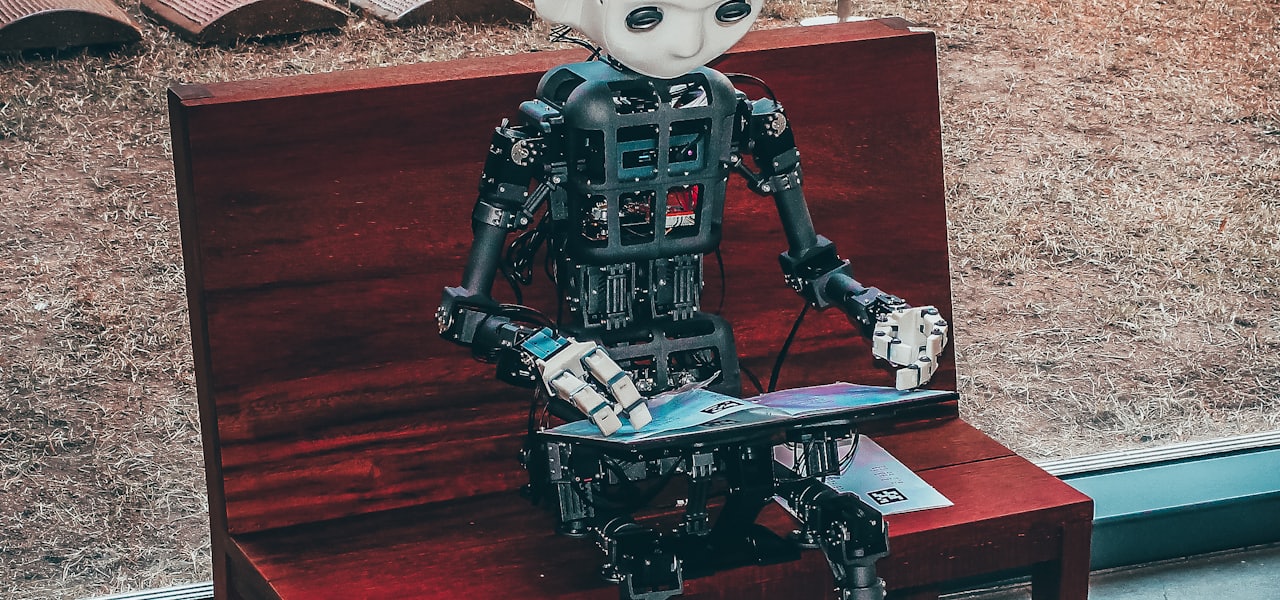
TipTop Technologies is a real-time web and social search engine with a platform for semantic analysis of natural language. Tip-Top Search provides results capturing individual and group sentiment, opinions, and experiences there from the content of various sorts such as real-time messages from Twitter or consumer product reviews on Amazon.com. TipTop Technologies and ITC Infotech collaborated to create a search interface suitable for both enterprise and consumer applications. Tip-Top's products are part of the "emerging Web 3.0 applications which use semantic technologies to augment the underlying Web system's functionalities." Their main product is 360, an AI tool that incorporates multiple AI applications under one wing. Jonathan AlBright professor at Elon University, found videos generated by TipTop Technologies software on YouTube in his research into artificial intelligence, described it as AI-generated "fake news". Through semantic analysis of large data sets, TipTop gleaned behavioral insights from Tweets around events like Halloween, Thanksgiving, Holiday Gifting, the Super Bowl, and the Oscar Nominees for the Academy Awards coverage. Sentiment analysis, concept trend tracking, and real-time market research are other applications included in the TipTop Search product. TipTop's insight engine solves the problem of real-time data noise, and its ability to "sort the 'good tweets' from the 'bad tweets' when it comes to a product, service, or a region..." In addition, products like TipTop Shopping with customizable search widgets bring together consumer reviews, social search, and sentiment analysis enabling product comparisons across attributes like the overall value and aiding purchasing decisions through user-driven product tips and pits. TipTop Finance adds another complexity to real-time search results by incorporating corporate sentiment, company stock tickers, and social media into TipTop's existing social search platform. Additional success applying semantic technologies has been with polling, "if you compare these Gallup results with TipTop, a sentiment engine based on Twitter, the results are not way off. It does surprise you but it tells me that sentiment analysis in case of public opinion about a burning social issue or a famous personality is relatively easier." With the increasing amount of unstructured, opinion-oriented, and user-generated content available on the Web, TipTop's technology aims to make sense of all this data, and deliver it in a useful way for consumer and enterprise users alike. TipTop Technologies is a privately held company with its headquarters in the San Francisco Bay Area, and team members are located globally.
Sherwood Applied Business Security Architecture
SABSA (Sherwood Applied Business Security Architecture) is a model and methodology for developing a risk-driven enterprise information security architecture and service management, to support critical business processes. It was developed independently from the Zachman Framework, but has a similar structure. The primary characteristic of the SABSA model is that everything must be derived from an analysis of the business requirements for security, especially those in which security has an enabling function through which new business opportunities can be developed and exploited. The process analyzes the business requirements at the outset, and creates a chain of traceability through the strategy and concept, design, implementation, and ongoing ‘manage and measure’ phases of the lifecycle to ensure that the business mandate is preserved. Framework tools created from practical experience further support the whole methodology. The model is layered, with the top layer being the business requirements definition stage. At each lower layer a new level of abstraction and detail is developed, going through the definition of the conceptual architecture, logical services architecture, physical infrastructure architecture and finally at the lowest layer, the selection of technologies and products (component architecture). The SABSA model itself is generic and can be the starting point for any organization, but by going through the process of analysis and decision-making implied by its structure, it becomes specific to the enterprise, and is finally highly customized to a unique business model. It becomes in reality the enterprise security architecture, and it is central to the success of a strategic program of information security management within the organization. SABSA is a particular example of a methodology that can be used both for IT (information technology) and OT (operational technology) environments. == SABSA matrix == Note: The above is the original SABSA Matrix, which is still valid today, but it has been expanded by a comprehensive service management matrix and updated in some detail and terminology areas. In the words of David Lynas, SABSA author, "The SABSA Matrix and the SABSA Service Management Matrix have not been updated since the late 90s. We have redesigned them to deliver the improvements your feedback has requested over the years. We have not fundamentally changed the structure or principles of the matrices (very few elements have changed position) but have focused on terminology update and consistency." The new versions can be downloaded (along with the 2009 revision of the SABSA White Paper and other important documents like the SABSA Certification Roadmap) at the SABSA Members' Web Site.
How to Choose an AI Resume Builder
Trying to pick the best AI resume builder? An AI resume builder is software that uses machine learning to help you get more done — it scales effortlessly from a single task to thousands. The best picks balance beginner-friendly simplicity with the depth power users need, and they ship updates often. Whether you are a beginner or a pro, the right AI resume builder slots into your workflow and pays for itself fast. This guide breaks down the top picks, their pros and cons, and who each one is best for.
David Blei
David Meir Blei is a professor in the Statistics and Computer Science departments at Columbia University. Prior to fall 2014 he was an associate professor in the Department of Computer Science at Princeton University. His work is primarily in machine learning. == Research == His research interests include topic models and he was one of the original developers of latent Dirichlet allocation, along with Andrew Ng and Michael I. Jordan. As of June 18, 2020, his publications have been cited 109,821 times, giving him an h-index of 116. == Honors and awards == Blei received the ACM Infosys Foundation Award in 2013. (This award is given to a computer scientist under the age of 45. It has since been renamed the ACM Prize in Computing.) He was named Fellow of ACM "For contributions to the theory and practice of probabilistic topic modeling and Bayesian machine learning" in 2015.
Top 10 AI Sales Assistants Compared (2026)
Looking for the best AI sales assistant? An AI sales assistant is software that uses machine learning to help you get more done — it can save you hours every week by automating repetitive work. Most options offer a generous free tier, with paid plans unlocking higher limits, faster processing, and team features. Whether you are a beginner or a pro, the right AI sales assistant slots into your workflow and pays for itself fast. This guide breaks down the top picks, their pros and cons, and who each one is best for.
Graphics processing unit
A graphics processing unit (GPU) is a specialized electronic circuit designed for digital image processing and to accelerate computer graphics, being present either as a component on a discrete graphics card or embedded on motherboards, mobile phones, personal computers, workstations, and game consoles. GPUs are increasingly being used for artificial intelligence (AI) processing due to linear algebra acceleration, which is also used extensively in graphics processing. Although there is no single definition of the term, and it may be used to describe any video display system, in modern use a GPU includes the ability to internally perform the calculations needed for various graphics tasks, like rotating and scaling 3D images, and often the additional ability to run custom programs known as shaders. This contrasts with earlier graphics controllers known as video display controllers which had no internal calculation capabilities, or blitters, which performed only basic memory movement operations. The modern GPU emerged during the 1990s, adding the ability to perform operations like drawing lines and text without CPU help, and later adding 3D functionality. Graphics functions are generally independent and this lends these tasks to being implemented on separate calculation engines. Modern GPUs include hundreds, or thousands, of calculation units. This made them useful for non-graphic calculations involving embarrassingly parallel problems due to their parallel structure. The ability of GPUs to rapidly perform vast numbers of calculations has led to their adoption in diverse fields including artificial intelligence (AI) where they excel at handling data-intensive and computationally demanding tasks. Other non-graphical uses include the training of neural networks and cryptocurrency mining. == History == === 1960s === Dedicated 3D graphics hardware dates back to graphic terminals such as the Adage AGT-30 from 1967 with analog matrix processors. In 1969 Evans & Sutherland (E&S) introduced the Line Drawing System-1 (LDS-1), which was the first all-digital system to provide matrix multiplication. Also in 1969, the low-cost graphics terminal IMLAC PDS-1 was introduced. It later saw use as an early 3D gaming machine with the likes of Maze War. === 1970s === In professional hardware, in 1972 PLATO IV system becomes operational at the University of Illinois Urbana-Champaign. Between around 1973 and 1978, several networked multiplayer wireframe 3D games are implemented and popularized by users of the system. Also in 1972, the E&S Continuous Tone 1 (CT1) "Watkins box" system (consisting of an E&S LDS-2 and Shaded Picture System) is delivered to Case Western Reserve University. It offered the first real-time Gouraud shading. In 1975, a joint effort between Evans & Sutherland Computer Corporation and the University of Utah's computer graphics department results in the first ever MOSFET video framebuffer, capable of color and smooth shading. E&S Continuous Tone 3 (CT3) system was delivered in 1977 to Lufthansa for pilot training using computer simulation. It was the first graphics system capable of real-time texture mapping. Ikonas made graphics systems with 8- and 24-bit graphics and 3D acceleration in the late 70s. Arcade system boards have used specialized 2D graphics circuits since the 1970s. In early video game hardware, RAM for frame buffers was expensive, so video chips composited data together as the display was being scanned out on the monitor. A specialized barrel shifter circuit helped the CPU animate the framebuffer graphics for various 1970s arcade video games from Midway and Taito, such as Gun Fight (1975), Sea Wolf (1976), and Space Invaders (1978). The Namco Galaxian arcade system in 1979 used specialized graphics hardware that supported RGB color, multi-colored sprites, and tilemap backgrounds. The Galaxian hardware was widely used during the golden age of arcade video games, by game companies such as Namco, Centuri, Gremlin, Irem, Konami, Midway, Nichibutsu, Sega, and Taito. The Atari 2600 in 1977 used a video shifter called the Television Interface Adaptor. Atari 8-bit computers (1979) had ANTIC, a video processor which interpreted instructions describing a "display list"—the way the scan lines map to specific bitmapped or character modes and where the memory is stored (so there did not need to be a contiguous frame buffer). 6502 machine code subroutines could be triggered on scan lines by setting a bit on a display list instruction. ANTIC also supported smooth vertical and horizontal scrolling independent of the CPU. === 1980s === In the 1980s significant advancements were made in professional 3D graphics hardware. Perhaps most impactful was the 1981 development of the Geometry Engine, a VLSI vector processor ASIC designed by Jim Clark and Marc Hannah at Stanford University. This processor is the forerunner of modern tensor cores and other similar processors marketed for graphics and AI. The Geometry Engine went on to be used in Silicon Graphics workstations for many years. Silicon Graphics's first product, shipped in November 1983, was the IRIS 1000, a terminal with hardware-accelerated 3D graphics based on the Geometry Engine. The Geometry Engine was capable of approximately 6 million operations per second. The 1981 NEC μPD7220 was the first implementation of a personal computer graphics display processor as a single large-scale integration (LSI) integrated circuit chip. This enabled the design of low-cost, high-performance video graphics cards such as those from Number Nine Visual Technology. It became the best-known GPU until the mid-1980s. It was the first fully integrated VLSI (very large-scale integration) metal–oxide–semiconductor (NMOS) graphics display processor for PCs, supported up to 1024×1024 resolution, and laid the foundations for the PC graphics market. It was used in a number of graphics cards and was licensed for clones such as the Intel 82720, the first of Intel's graphics processing units. The Williams Electronics arcade games Robotron: 2084, Joust, Sinistar, and Bubbles, all released in 1982, contain custom blitter chips for operating on 16-color bitmaps. In 1984, Hitachi released the ARTC HD63484, the first major CMOS graphics processor for personal computers. The ARTC could display up to 4K resolution when in monochrome mode. It was used in a number of graphics cards and terminals during the late 1980s. In 1985, the Amiga was released with a custom graphics chip called Agnus including a blitter for bitmap manipulation, line drawing, and area fill. It also included a coprocessor with its own simple instruction set, that was capable of manipulating graphics hardware registers in sync with the video beam (e.g. for per-scanline palette switches, sprite multiplexing, and hardware windowing), or driving the blitter. Also in 1985, IBM released the Professional Graphics Controller, designed by later to be Nvidia co-founder Curtis Priem, which was a rudimentary 3D card with 640 × 480 256-color graphics which used a dedicated CPU to draw graphics independently of the main system. It was used as the basis of cards by a number of makers (including Matrox) and its analog RGB signaling led directly to the VGA video standard. Priem later in the 80s worked on the influential Sun Microsystems GX (also known as cgsix) accelerated 2D graphics card. In 1986, Texas Instruments released the TMS34010, the first fully programmable graphics processor. It could run general-purpose code but also had a graphics-oriented instruction set. During 1990–1992, this chip became the basis of the Texas Instruments Graphics Architecture ("TIGA") Windows accelerator cards. Following in 1987, the IBM 8514 graphics system was released. It was one of the first video cards for IBM PC compatibles that implemented fixed-function 2D primitives in electronic hardware. Sharp's X68000, released in 1987, used a custom graphics chipset with a 65,536 color palette and hardware support for sprites, scrolling, and multiple playfields. It served as a development machine for Capcom's CP System arcade board. Fujitsu's FM Towns computer, released in 1989, had support for a 16,777,216 color palette. For context, IBM also introduced its Video Graphics Array (VGA) display system in 1987, with a maximum resolution of 640 × 480 pixels. Unlike 8514/A, VGA had no hardware acceleration features. In November 1988, NEC Home Electronics announced its creation of the Video Electronics Standards Association (VESA) to develop and promote a Super VGA (SVGA) computer display standard as a successor to VGA. Super VGA enabled graphics display resolutions up to 800 × 600 pixels, a 56% increase. In 1988 SGI sold IRIS workstation graphics with 10-12 Geometry Engines and introduced the IrisVision add-in board for IBM MicroChannel bus (RS/6000) based on the Geometry Engine as well. In 1988 as well, the first dedicated polygonal 3D graphics boards in arcade machines were introduced wit
Transfer-based machine translation
Transfer-based machine translation is a type of machine translation (MT). It is currently one of the most widely used methods of machine translation. In contrast to the simpler direct model of MT, transfer MT breaks translation into three steps: analysis of the source language text to determine its grammatical structure, transfer of the resulting structure to a structure suitable for generating text in the target language, and finally generation of this text. Transfer-based MT systems are thus capable of using knowledge of the source and target languages. == Design == Both transfer-based and interlingua-based machine translation have the same idea: to make a translation it is necessary to have an intermediate representation that captures the "meaning" of the original sentence in order to generate the correct translation. In interlingua-based MT this intermediate representation must be independent of the languages in question, whereas in transfer-based MT, it has some dependence on the language pair involved. The way in which transfer-based machine translation systems work varies substantially, but in general they follow the same pattern: they apply sets of linguistic rules which are defined as correspondences between the structure of the source language and that of the target language. The first stage involves analysing the input text for morphology and syntax (and sometimes semantics) to create an internal representation. The translation is generated from this representation using both bilingual dictionaries and grammatical rules. It is possible with this translation strategy to obtain fairly high quality translations, with accuracy in the region of 90% (although this is highly dependent on the language pair in question, for example the distance between the two). == Operation == In a rule-based machine translation system the original text is first analysed morphologically and syntactically in order to obtain a syntactic representation. This representation can then be refined to a more abstract level putting emphasis on the parts relevant for translation and ignoring other types of information. The transfer process then converts this final representation (still in the original language) to a representation of the same level of abstraction in the target language. These two representations are referred to as "intermediate" representations. From the target language representation, the stages are then applied in reverse. == Analysis and transformation == Various methods of analysis and transformation can be used before obtaining the final result. Along with these statistical approaches may be augmented generating hybrid systems. The methods which are chosen and the emphasis depends largely on the design of the system, however, most systems include at least the following stages: Morphological analysis. Surface forms of the input text are classified as to part-of-speech (e.g. noun, verb, etc.) and sub-category (number, gender, tense, etc.). All of the possible "analyses" for each surface form are typically made output at this stage, along with the lemma of the word. Lexical categorisation. In any given text some of the words may have more than one meaning, causing ambiguity in analysis. Lexical categorisation looks at the context of a word to try to determine the correct meaning in the context of the input. This can involve part-of-speech tagging and word sense disambiguation. Lexical transfer. This is basically dictionary translation; the source language lemma (perhaps with sense information) is looked up in a bilingual dictionary and the translation is chosen. Structural transfer. While the previous stages deal with words, this stage deals with larger constituents, for example phrases and chunks. Typical features of this stage include concordance of gender and number, and re-ordering of words or phrases. Morphological generation. From the output of the structural transfer stage, the target language surface forms are generated. == Transfer types == One of the main features of transfer-based machine translation systems is a phase that "transfers" an intermediate representation of the text in the original language to an intermediate representation of text in the target language. This can work at one of two levels of linguistic analysis, or somewhere in between. The levels are: Superficial transfer (or syntactic). This level is characterised by transferring "syntactic structures" between the source and target languages. It is suitable for languages in the same family or of the same type, for example in the Romance languages between Spanish, Catalan, French, Italian, etc. Deep transfer (or semantic). This level constructs a semantic representation that is dependent on the source language. This representation can consist of a series of structures which represent the meaning. In these transfer systems predicates are typically produced. The translation also typically requires structural transfer. This level is used to translate between more distantly related languages (e.g. Spanish-English or Spanish-Basque, etc.)