Couch to 5K, abbreviated C25K, is an exercise plan that gradually progresses from beginner running toward a 5 kilometre (3.1 mile) run over nine weeks. == Operations == The Couch to 5K running plan, also known as C25K, created by Josh Clark in 1996, was developed with the expectation of creating a plan for new runners to start running. The plan is aimed to have users work out for 20 to 30 minutes, three days a week. Within the program, users can be expected to perform different tasks such as intervals of running with period of short walks in between to help build endurance in the weeks up to the final goal of a 5K run. During the nine weeks leading up to the race, the runner will learn to set their own pace and where their strengths and weaknesses are within running. Often, the daily workouts start with a five-minute warm-up walk and works up to running five kilometres without a walking break within nine weeks. Users are not expected to have any experience in running and can be some of the first running that they ever do. The main goal is to turn that unexperienced runner into someone who can run a 5K. Clark started the website Kick and featured C25K on the site. In 2001, Kick merged with Cool Running, a New England–based running site. Clark later sold his stake in Cool Running and the Couch to 5K program. Cool Running was absorbed into Active.com, operated by Active Network, LLC. Active Network provides mobile apps for Couch to 5K, as well as 5K to 10K, a follow-up program. The NHS in the UK provides downloadable podcasts and a smartphone app (Android and iOS) for the plan. A mobile app, created by Zen Labs, has training plans that are based on the Couch to 5K running plan from CoolRunning.com. It is one of the highest-rated health and fitness apps available on Android and iOS. As of 2016, the C25K app has been used by over 5 million people.
Perceptual robotics
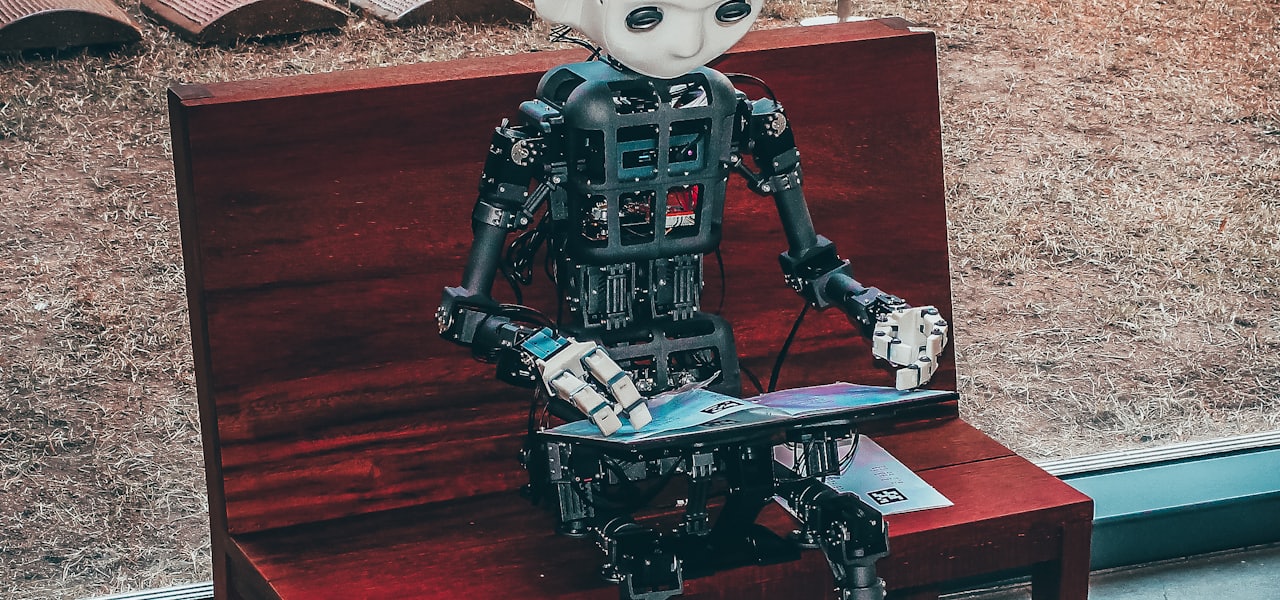
Perceptual robotics is an interdisciplinary science linking Robotics and Neuroscience. It investigates biologically motivated robot control strategies, concentrating on perceptual rather than cognitive processes and thereby sides with J. J. Gibson's view against the Poverty of the stimulus theory. As a working definition, the following quote from Chapter 64 by H. Bülthoff, C. Wallraven and M. Giese from The Springer Handbook of Robotics, edited by Bruno Siciliano and Oussama Khatib, published by Springer in 2007, could be used: In the following we will apply the term Perceptual Robotics to signify the design of robots based on principles that are derived from human perception on all three levels in the sense of Marr. This includes a realization in terms of specific neural circuits as well as the transfer of more abstract biologically-inspired strategies for the solution of relevant computational problems.
Geo-replication
Geo-replication systems are designed to provide improved availability and disaster tolerance by using geographically distributed data centers. This is intended to improve the response time for applications such as web portals. Geo-replication can be achieved using software, hardware or a combination of the two. == Software == Geo-replication software is a network performance-enhancing technology that is designed to provide improved access to portal or intranet content for users at the most remote parts of large organizations. It is based on the principle of storing complete replicas of portal content on local servers, and then keeping the content on those servers up-to-date using heavily compressed data updates. === Portal acceleration === Geo-replication technologies are used to provide replication of the content of portals, intranets, web applications, content and data between servers, across wide area networks WAN to allow users at remote sites to access central content at LAN speeds. Geo-replication software can improve the performance of data networks that suffer limited bandwidth, latency and periodic disconnection. Terabytes of data can be replicated over a wide area network, giving remote sites faster access to web applications. Geo-replication software uses a combination of data compression and content caching technologies. differencing technologies can also be employed to reduce the volume of data that has to be transmitted to keep portal content accurate across all servers. This update compression can reduce the load that portal traffic places on networks, and improve the response time of a portal. === Portal replication === Remote users of web portals and collaboration environments will frequently experience network bandwidth and latency problems which will slow down their experience of opening and closing files, and otherwise interacting with the portal. Geo-replication technology is deployed to accelerate the remote end user portal performance to be equivalent to that experienced by users locally accessing the portal in the central office. === Differencing engine technologies === To deliver this reduction in the size of the required data updates across a portal, geo-replication systems often use differencing engine technologies. These systems are able to difference the content of each portal server right down to the byte level. This knowledge of the content that is already on each server enables the system to rebuild any changes to the content on one server, across each of the other servers in the deployment from content already hosted on those other servers. This type of differencing system ensures that no content, at the byte level, is ever sent to a server twice. === Offline portal replication on laptops === Geo-replication systems are often extended to deliver local replication beyond the server and down to the laptop used by a single user. Server to laptop replication enables mobile users to have access to a local replica of their business portal on a standard laptop. This technology may be employed to provide in the field access to portal content by, for example, sales forces and combat forces. == Geo-replication systems ==
Cloud testing
Cloud testing is a form of software testing in which web applications use cloud computing environments (a "cloud") to simulate real-world user traffic. == Steps == Companies simulate real world Web users by using cloud testing services that are provided by cloud service vendors such as Advaltis, Compuware, HP, Keynote Systems, Neotys, RadView and SOASTA. Once user scenarios are developed and the test is designed, these service providers leverage cloud servers (provided by cloud platform vendors such as Amazon.com, Google, Rackspace, Microsoft, etc.) to generate web traffic that originates from around the world. Once the test is complete, the cloud service providers deliver results and analytics back to corporate IT professionals through real-time dashboards for a complete analysis of how their applications and the internet will perform during peak volumes. == Applications == Cloud testing is often seen as only performance or load tests, however, as discussed earlier it covers many other types of testing. Cloud computing itself is often referred to as the marriage of software as a service (SaaS) and utility computing. In regard to test execution, the software offered as a service may be a transaction generator and the cloud provider's infrastructure software, or may just be the latter. Distributed Systems and Parallel Systems mainly use this approach for testing, because of their inherent complex nature. D-Cloud is an example of such a software testing environment. == Tools == Leading cloud computing service providers include, among others, Amazon, Microsoft, Google, RadView, Skytap, HP and SOASTA. == Benefits == The ability and cost to simulate web traffic for software testing purposes has been an inhibitor to overall web reliability. The low cost and accessibility of the cloud's extremely large computing resources provides the ability to replicate real world usage of these systems by geographically distributed users, executing wide varieties of user scenarios, at scales previously unattainable in traditional testing environments. Minimal start-up time along with quality assurance can be achieved by cloud testing. Following are some of the key benefits: Reduction in capital expenditure Highly scalable
Radek Maneuver
The Radek Maneuver is a scale-up-then-scale-down tactic used in the administration of web services, specifically those deployed under a cloud computing paradigm (by a provider e.g. Amazon Elastic Compute Cloud or Microsoft Azure). == History == Developed by Olivier "Radek" Dabrowski in the mid-2010s, the Radek Maneuver was originally conceived of in using and maintaining applications running on a PaaS system. == Execution == The Radek Maneuver consists of a series of steps, usually executed via the PaaS or web portal interface. The tactic should be used when a service is misbehaving or otherwise experiencing errors, and the suspected cause is the underlying cloud layer, rather than the application layer. This includes networking issues and other "bad box" problems. The steps are as follows: Identify the application or service which is misbehaving. Increase the compute resource (number of CPU cores, amount of ram) for the instance on which the application is running. This is also known as scaling up. Wait for the application to re-deploy and stabilize. Scale back down to the original instance size. == Principle of action == This scale-up-scale-down method is understood to shift the application to a different physical machine underlying the PaaS service or application virtual machine. While this layer of the cloud computing stack is generally out of the access of an application developer (instead in the hands of the cloud provider), the maneuver allows troubleshooting and dodging errors in that layer.
Smart environment
Smart environments link computers and other smart devices to everyday settings and tasks. Smart environments include smart homes, smart cities, and smart manufacturing. == Introduction == Smart environments are an extension of pervasive computing. According to Mark Weiser, pervasive computing promotes the idea of a world that is connected to sensors and computers. These sensors and computers are integrated with everyday objects in peoples' lives and are connected through networks. == Definition == Cook and Das, define a smart environment as "a small world where different kinds of smart devices are continuously working to make inhabitants' lives more comfortable." Smart environments aim to satisfy the experience of individuals from every environment, by replacing hazardous work, physical labor, and repetitive tasks with automated agents. Poslad differentiates three different kinds of smart environments for systems, services, and devices: virtual (or distributed) computing environments, physical environments, and human environments, or a hybrid combination of these: Virtual computing environments enable smart devices to access pertinent services anywhere and anytime. Physical environments may be embedded with various smart devices of different types including tags, sensors, and controllers, and have different form factors ranging from nano- to micro- to macro-sized. Human environments: humans, either individually or collectively, inherently form a smart environment for devices. However, humans themselves may be accompanied by smart devices such as mobile phones, use surface-mounted devices (wearable computing), and contain embedded devices (e.g., pacemakers to maintain a healthy heart operation or AR contact lenses) == Features == Smart environments encompass a range of features and services across various domains, including smart homes, smart cities, smart health, and smart factories. Some of the key features of smart environments are: Sensors and Actuators: Smart environments are equipped with an assembly of sensors and actuators that collect data and initiate actions to provide services for the betterment of human life. Interconnected Systems: These environments consist of interconnected systems that enable seamless communication and coordination among various devices and components. Data-Driven Technologies: Smart environments leverage data-driven technologies, such as the Internet of Things (IoT), to obtain information from the physical world, process it, and perform actions accordingly. Efficiency and Sustainability: They are designed to improve efficiency, sustainable practices, and resource management across different settings, such as energy efficiency in smart homes and environmental quality management in smart cities. Diverse Requirements: Different types of smart environments have diverse requirements and technology choices, influencing the processing and utilization of data within a specific environment. == Technologies == Building a smart environment involves technologies of Wireless communication Algorithm design, signal prediction & classification, information theory Multilayered software architecture, Corba, middleware Speech recognition Image processing, image recognition Sensors design, calibration, motion detection, temperature, pressure sensors, accelerometers Semantic Web and knowledge graphs Adaptive control, Kalman filters Computer networking Parallel processing Operating systems == Existing projects == The Aware Home Research Initiative at Georgia Tech "is devoted to the multidisciplinary exploration of emerging technologies and services based in the home" and was launched in 1998 as one of the first "living laboratories." The Mav Home (Managing an Adaptive Versatile Home) project, at UT Arlington, is a smart environment-lab with state-of-the-art algorithms and protocols used to provide a customized, personal environment to the users of this space. The Mav Home project, in addition to providing a safe environment, wants to reduce the energy consumption of the inhabitants. Other projects include House at the MIT Media Lab and many others.
SEMAT
SEMAT (Software Engineering Method and Theory) is an initiative to reshape software engineering such that software engineering qualifies as a rigorous discipline. The initiative was launched in December 2009 by Ivar Jacobson, Bertrand Meyer, and Richard Soley with a call for action statement and a vision statement. The initiative was envisioned as a multi-year effort for bridging the gap between the developer community and the academic community and for creating a community giving value to the whole software community. The work is now structured in four different but strongly related areas: Practice, Education, Theory, and Community. The Practice area primarily addresses practices. The Education area is concerned with all issues related to training for both the developers and the academics including students. The Theory area is primarily addressing the search for a General Theory in Software Engineering. Finally, the Community area works with setting up legal entities, creating websites and community growth. It was expected that the Practice area, the Education area and the Theory area would at some point in time integrate in a way of value to all of them: the Practice area would be a "customer" of the Theory area, and direct the research to useful results for the developer community. The Theory area would give a solid and practical platform for the Practice area. And, the Education area would communicate the results in proper ways. == Practice area == The first step was here to develop a common ground or a kernel including the essence of software engineering – things we always have, always do, always produce when developing software. The second step was envisioned to add value on top of this kernel in the form of a library of practices to be composed to become specific methods, specific for all kinds of reasons such as the preferences of the team using it, kind of software being built, etc. The first step is as of this writing just about to be concluded. The results are a kernel including universal elements for software development – called the Essence Kernel, and a language – called the Essence Language - to describe these elements (and elements built on top of the kernel (practices, methods, and more). Essence, including both the kernel and language, has been published as an OMG standard in beta status in July 2013 and is expected to become a formally adopted standard in early 2014. The second step has just started, and the Practice area will be divided into a number of separate but interconnected tracks: the practice (library track), the tool track are so far identified and work has started or is about to get started. The practice track is currently working on a Users Guide. == Education area == The area focuses on leveraging the work of SEMAT in software engineering education, both within academia and industry. It promotes global education based on a common ground called Essence. The area's target groups are instructors such as university professors and industrial coaches as well as their students and learning practitioners. The goal of the area is to create educational courses and course materials that are internationally viable, identify pedagogical approaches that are appropriate and effective for specific target groups and disseminate experience and lessons learned. The area includes members from a number of universities and institutes worldwide. Most members have already been involved in leveraging aspects of SEMAT in the context of their software engineering courses. They are gathering their resources and starting a common venture towards defining a new generation of SEMAT-powered software engineering curricula. As of 2018, some studies of utilizing Essence in educational settings exist. One example of the use of Essence in university education was a software engineering course carried out in Norwegian University of Science and Technology. A study was conducted by introducing Essence into a project-based software engineering course, with the aim of understanding what difficulties the students faced in using Essence, and whether they considered it to have been useful. The results indicated that Essence could also be useful for novice software engineers by (1) encouraging them to look up and study new practices and methods in order to create their own, (2) encouraging them to adjust their way-of-working reflectively and in a situation-specific manner, (3) helping them structure their way of working. The findings of another study introducing students to Essence through a digital game supported these findings: the students felt that Essence will be useful to them in future, real-world projects, and that they wish to utilize it in them. == Theory area == An important part of SEMAT is that a general theory of software engineering is planned to emerge with significant benefits. A series of workshops held under the title SEMAT Workshop on a General Theory of Software Engineering (GTSE) are a key component in awareness building around general theories. In addition to community awareness building, SEMAT also aims to contribute with a specific general theory of software engineering. This theory should be solidly based on the SEMAT Essence language and kernel, and should support software engineering practitioners' goal-oriented decision making. As argued elsewhere, such support is predicated on the predictive capabilities of the theory. Thus, the SEMAT Essence should be augmented to allow the prediction of critical software engineering phenomena. The GTSE workshop series assists in the development of the SEMAT general software engineering theory by engaging a larger community in the search for, development of, and evaluation of promising theories, which may be used as a base for the SEMAT theory. == Organizational structure == === Main organization === SEMAT is chaired by Sumeet S. Malhotra of Tata Consultancy Services. The CEO of the organization is Ste Nadin of Fujitsu. The Executive Management Committee of SEMAT are Ivar Jacobson, Ste Nadin, Sumeet S. Malhotra, Paul E. McMahon, Michael Goedicke and Cecile Peraire. === Japan Chapter === Japan Chapter was established in April 2013, and it has more than 250 members as of November 2013. Member activities include carrying out seminars about SEMAT, considering utilization of SEMAT Essence for integrating different requirements engineering techniques and body of knowledges (BoKs), and translating articles into Japanese. === Korea Chapter === The chapter was inaugurated with about 50 members in October 2013. Member activities include: 2e Consulting started rewriting their IT service engagement methods using the Essence kernel, and uEngine Solutions started developing a tool to orchestrate Essence-kernel based practices into a project method. Korean government supported KAIST to conduct research in Essence. === Latin American Chapter === Semat Latin American Chapter was created in August 2011 in Medellin (Colombia) by Ivar Jacobson during the Latin American Software Engineering Symposium. This Chapter has 9 Executive Committee members from Colombia, Venezuela, Peru, Brazil, Argentina, Chile, and Mexico, chaired by Dr. Carlos Zapata from Colombia. More than 80 people signed the initial declaration of the Chapter and nowadays the Chapter members are in charge of disseminating the Semat ideas in all Latin America. Chapter members have participated in various Latin American conferences, including the Latin American Conference on Informatics (CLEI), the Ibero American Software Engineering and Knowledge Engineering Journeys (JIISIC), the Colombian Computing Conference (CCC), and the Chilean Computing Meeting (ECC). The Chapter contributed in the submission sent in response to the OMG call for proposals and currently studies didactic strategies for teaching the Semat kernel by games, theoretical studies about some kernel elements, and practical representations of several software development and quality methods by using the Semat kernel. Some of the members also translated the Essence book and some other Semat materials and papers into Spanish. === Russia Chapter === Russian Chapter has about 20 members. A few universities have incorporated SEMAT in their training courses , including Moscow State University, Moscow Institute of Physics and Technology, Higher School of Economics, Moscow State University of Economics, Statistics, and Informatics. The chapter and some commercial companies are carrying out seminars about SEMAT. INCOSE Russian Chapter is working on an extension of SEMAT to systems engineering. EC-leasing is working on an extension of the Kernel for Software Life Cycle. Russian Chapter attended in two conferences: Actual Problems of System and Software Engineering and SECR with SEMAT section and articles. Translation of the Essence book into Russian is in progress. == Practical Applications of SEMAT == Ideas developed by the SEMAT community have been applied by both industry and ac